
Credit building, financial management, and advocating for fair pay are critical life skills—yet for many, they remain daunting and difficult to access. That’s what makes the Owesta Credit Building Workshop such a powerful resource. Held in Clark County, this recent event provided an essential learning opportunity designed to empower individuals with the knowledge and confidence to take control of their financial futures.
The workshop was hosted through a partnership between the Native American Youth and Family Center (NAYA), the Northwest Native American Asset Building Coalition, and United Way of the Columbia-Willamette. Together, these organizations are working to break down systemic barriers and deliver culturally responsive financial education that meets people where they are. Their collaborative effort reflects a shared commitment to economic equity and uplifting historically underserved communities.
Led by experienced facilitators Rocky Hollenbaugh and Wendy Ortman, the workshop drew nearly 30 participants representing a range of cultural backgrounds, ages, and income levels. Through a mix of engaging lectures, real-life scenarios, and interactive exercises, attendees explored practical strategies for building and maintaining credit, budgeting effectively, saving with purpose, and negotiating wages with confidence. These topics—often considered intimidating or taboo—were presented in a way that was accessible, relevant, and affirming.
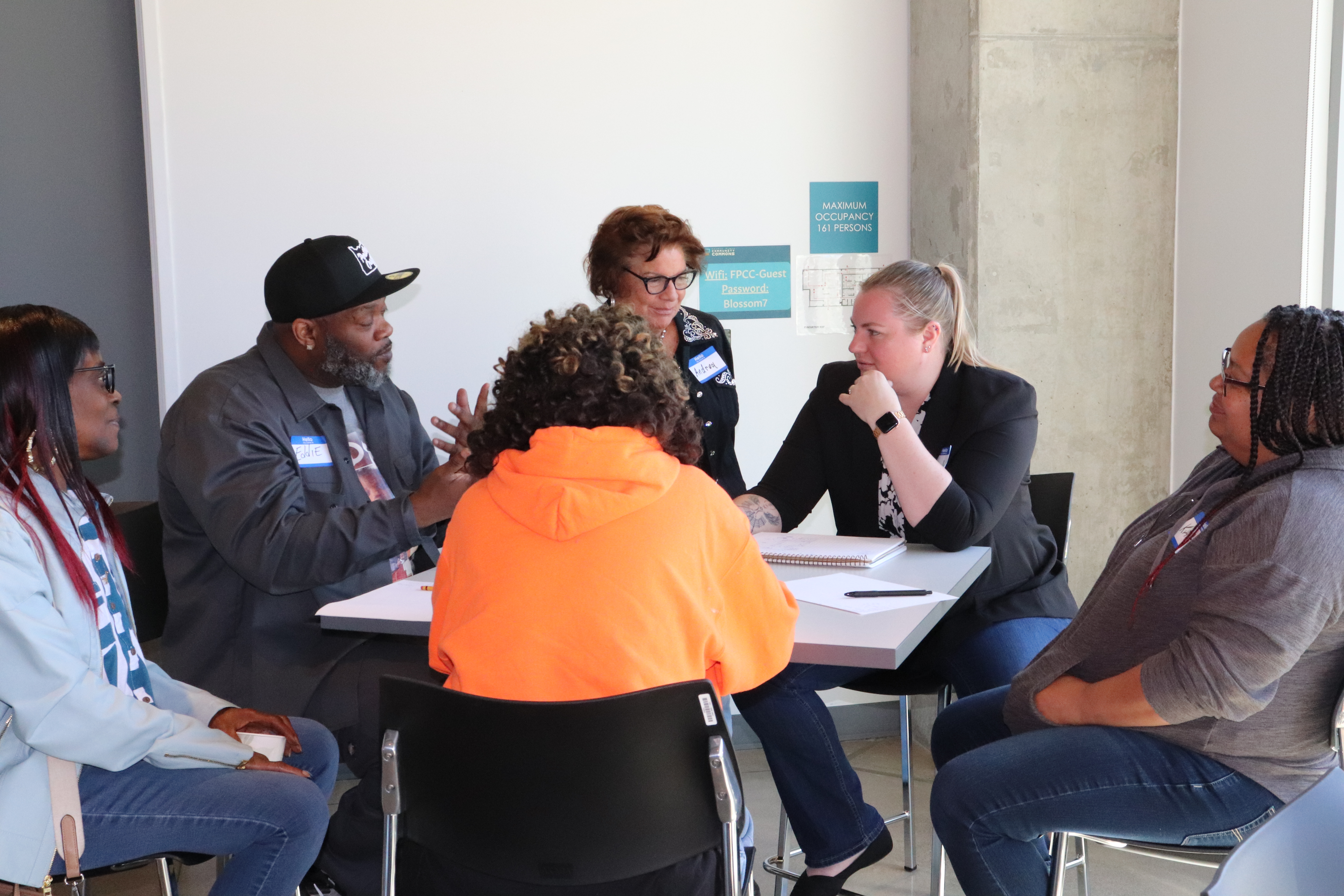
Participants of the Owesta Credit Building Training collaborated in small groups to complete a budget simulation exercise.
Hollenbaugh and Ortman set the tone for a welcoming, nonjudgmental learning environment, encouraging participants to ask questions, share experiences, and support one another. What began as a room filled with quiet uncertainty quickly transformed into a vibrant, open dialogue—where stories were exchanged, barriers were acknowledged, and solutions were shared.
The significance of workshops like Owesta cannot be overstated. For Black, Latine, and Tribal communities in particular—who have long faced disproportionate financial exclusion and inequity—access to culturally grounded financial education is a vital step toward long-term economic self-determination. By creating space for financial healing and growth, programs like this help individuals move from financial stress to financial strength.
As these community-based workshops continue to expand, they lay the groundwork for greater financial inclusion, resilience, and empowerment—one conversation, one skill, and one step at a time.
Do you like this page?
